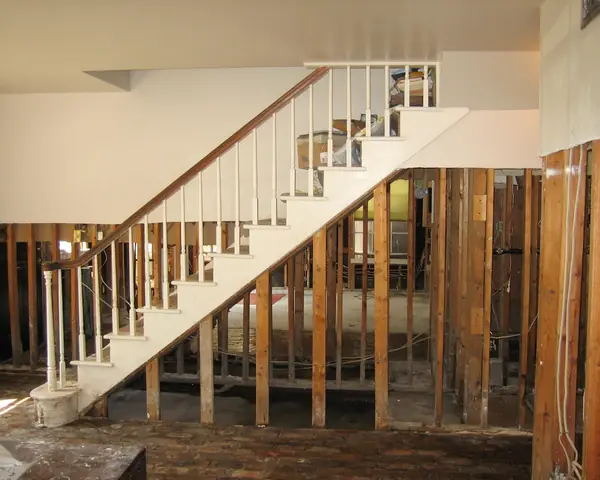
Queens, New York
Queens water damage restoration
Water in the basement, a burst pipe or a flooded street: tell us your neighborhood and what happened, and an independent local restoration provider can contact you.
Every Queens neighborhood
Houses, two-families, co-ops
Free to ask
25
Neighborhoods on the Queens tile map
From Astoria and Long Island City to Far Rockaway and Rockaway Park.
1.75 in an hour
NYC’s sewer capacity, per hour
Ida dropped 3.5 inches an hour in some areas, says the NYC Health Department.
24 to 48 hours
The EPA window to dry water damage
Dry water-damaged areas and items in that time to prevent mold growth, the EPA says.
You decide
Nothing is booked for you
The provider inspects and quotes. You choose whether to go ahead.
- Astoria
- Long Island City
- Sunnyside
- Woodside
- Jackson Heights
- Elmhurst
- Corona
- Flushing
- Bayside
- Whitestone
- Fresh Meadows
- Forest Hills
- Rego Park
- Kew Gardens
- Ridgewood
- Middle Village
- Maspeth
- Richmond Hill
- Ozone Park
- Howard Beach
- Jamaica
- St. Albans
- Rosedale
- Far Rockaway
- Rockaway Park
Pick your neighborhood: each tile opens what to know there.
Queens, tile by tile
Water damage help in every Queens neighborhood
Queens is a borough of houses as much as apartments: detached and attached houses with full basements, two-family homes with a tenant upstairs or below, brick row houses, garden co-ops built around courtyards and new towers on the East River. Each takes on water its own way. Pick your neighborhood on the map to read what matters there, or send the form and name it.
- The RockawaysOcean and bay on both sides: surge and seawater.
- Howard BeachOn Jamaica Bay, listed for FloodHelpNY’s valve program.
- AstoriaTwo-family houses and walk-ups: leaks and mold.
- Long Island CityTowers on the waterfront, row houses inland.
- FlushingApartment buildings and houses with basements.
- JamaicaHouses with basements, mold after a leak.
- Forest HillsCo-ops and Tudor houses.
- All 25 neighborhoodsThe full list, one line on each.

What happened
Water damage restoration in Queens, by what happened
Six common jobs in Queens homes, each with its own page: what to do first, what the work involves and the New York rules that apply.
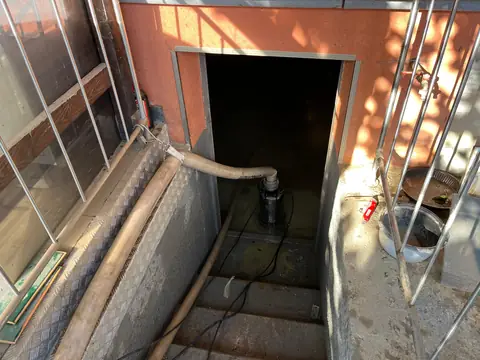
Water in the basement
Standing water now: power, the main valve, then pump-out and extraction. Read water removal in Queens first.
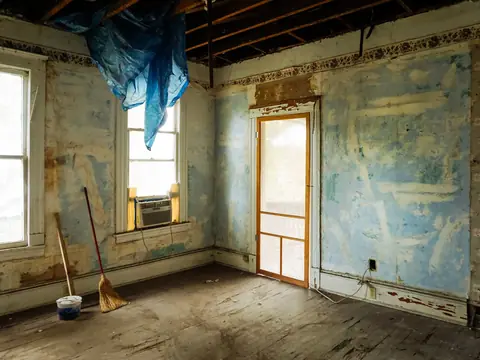
Drying and repairs
After the water: drying, wet drywall and floors, finished basements, and when work needs a DOB permit.
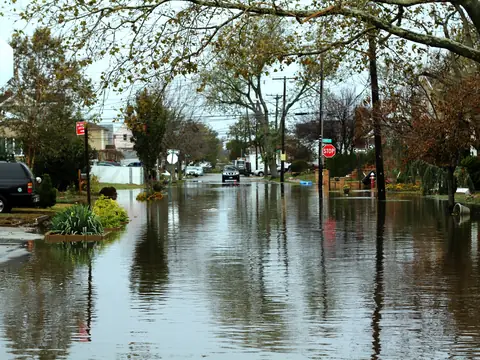
Storm and street flooding
Rain floods inland basements; surge floods the shoreline. Flood cleanup with Category 3 water in mind.
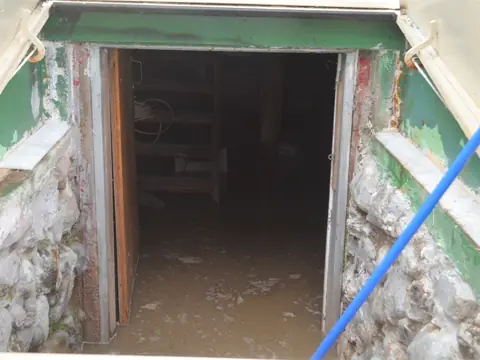
Sewer backup
Water up through a floor drain or toilet in heavy rain: contaminated water and what has to go.
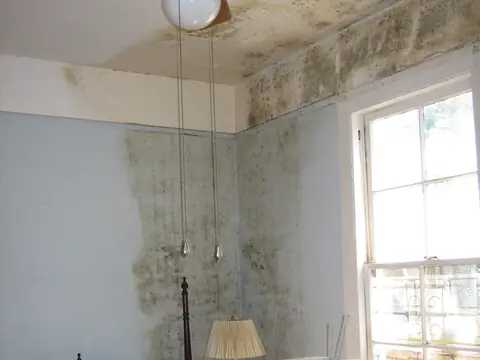
Mold after water damage
The 10 square foot line, independent assessor and remediator, and Local Law 55 in buildings of three or more units.
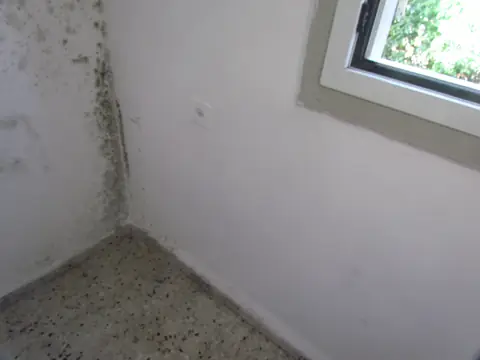
Mold inspection
Testing before work and the post-remediation assessment New York State requires, by someone who does not do the removal.


Water in the basement: the first hour
What you do before anyone arrives matters most. Safety first, then stop the water, then record it.
- Stay out if outlets or the panel are near the waterSwitch the main power off only from a dry place. Never touch switches or tools while standing in water. Smell gas? Leave.
- Shut the main valveIf a pipe burst or a fixture is leaking, the main valve where the water line enters the home stops the flow. Find it before you need it.
- Move what you can off the floorLift boxes, rugs and electronics out of the water if you can do it without standing in it.
- Photograph everythingWide shots and close-ups of the water line, the source and every damaged item, before anything is thrown out.
- Send the requestName your neighborhood and what happened.
How it works
Four steps, then you decide
Nothing is booked and nothing is charged by sending the form.

Tell us your neighborhood
Pick it on the form, then say what happened and whether water is still coming in.
A local provider can contact you
Your details go to an independent restoration provider serving Queens, who gets in touch by phone.
They inspect and quote
The provider looks at the damage, finds where the water went and quotes the work directly to you.
You decide
Go ahead, ask questions, get a second quote or say no. The choice is yours.
Water damage restoration Queens
What water damage restoration in Queens involves
Water damage restoration is the work of getting a building back to dry and sound after water has got where it should not be. In a Queens house that usually means a basement: a pipe that split in a cold snap, a water heater that gave out, a floor drain that pushed sewage back up during a downpour, or rain that ran down the driveway and under the door at the bottom of the basement steps. In an apartment it is more often a leak from the unit above. The job runs in the same order every time: stop the water, remove what is standing, dry what can be saved, remove what cannot, check for mold, then repair.
Queens Water Damage Restoration is an independent referral service, not a restoration company. When you send the form, your details go to an independent local restoration provider serving Queens, who can contact you, inspect and quote any work directly. You decide whether to hire them.
The most urgent part is the clock. The EPA’s guidance is to dry water-damaged areas and items within 24 to 48 hours to prevent mold growth, and it puts the whole subject in one line: the key to mold control is moisture control. Anything that stays wet longer than that, carpet pad, drywall, the bottom plates of a stud wall, becomes a place mold can start. That is why the first hour matters and why the water removal in Queens page starts with the main valve and the electricity, not with equipment.

Not all water is the same
Restorers sort water by how contaminated it is. The industry standard for this work, the ANSI/IICRC S500, sorts water into three categories by contamination, and its definition of the worst, Category 3, is plain: it is grossly contaminated and can contain pathogenic, toxigenic or other harmful agents. Its examples include sewage, all forms of flooding from seawater and rising water from rivers or streams. In Queens that covers a sewer backup in a Jamaica basement and surge water in the Rockaways alike. The standard also says time and temperature can change a category, so clean water from a burst pipe may not stay clean once it has soaked into a carpet for days. The article on Category 3 water damage goes through it.
Two kinds of flood
Why Queens basements flood
Queens floods two ways. On the shoreline, along Jamaica Bay and the Atlantic in the Rockaways, Broad Channel and Howard Beach, the danger is surge: seawater pushed in by a storm. Superstorm Sandy in 2012 showed what that does. The NYC Health Department counts 52 injury deaths from Sandy in the city, most along the coasts, and 25 percent of them were in Queens. At least a third of those who drowned at home were found in a basement or lived in a basement apartment.
Inland, the danger is rain. In September 2021 Hurricane Ida dropped about nine inches of rain on New York City, and in some areas it fell at 3.5 inches an hour, twice NYC’s sewer capacity of 1.75 inches an hour. The National Weather Service issued its first-ever flash flood emergency for the city. Fourteen people died from causes related to Ida, and ten of them drowned in unregulated basement apartments. The Health Department’s point is that this kind of flooding can happen anywhere in the city, not only near the water. The Ida article has the full numbers.
NYC’s Department of Environmental Protection names four kinds of flooding: street flooding from blocked catch basins, coastal flooding, groundwater coming through foundation cracks or a leaking floor drain, and sewer backups when heavy rain overloads the pipes. A Queens basement can get any of them. Flood cleanup in Queens covers the cleanup; keeping the next one out, with backwater valves and downspouts, is on the basement waterproofing page.


Houses, two-families, co-ops
Who does what in a Queens building
In a one-family house the owner decides everything. In a two-family house with a tenant, or a building of three or more apartments, the rules change. NYC’s Health Department says owners of buildings with three or more apartments must keep tenants’ homes free of mold, and that includes safely repairing the leaks that cause it. Local Law 55 of 2018 puts the same duty in law and has owners inspect units every year. A tenant who sees a leak or mold should tell the landlord first, and if it is not fixed, file a complaint online or call 311.
In co-ops and condos, from the garden co-ops of Jackson Heights to the towers of Long Island City, the building’s management and the unit owner each have their own part and may each carry their own insurance. Tell the super or managing agent at once, because the source may be in a riser or the unit above, and record the damage in your unit before anything is cleaned up.
The IICRC S500 also puts finding and correcting the cause of the water on the property owner, not on the restorer. A restoration provider dries the building. The leak itself, a pipe, a water heater, a failed seal, is the owner’s to fix, often with a plumber.
Insurance, in general
Insurance after water damage: what the public sources say
This site cannot tell you what your policy covers, and no one should promise you a claim outcome before your insurer has seen it. The public sources are clear on one point: FloodSmart, the federal flood insurance program’s site, says most homeowners insurance does not cover flood damage, and only flood insurance covers the cost of rebuilding after a flood. FloodHelpNY says flood damage to a renter’s belongings is not likely to be covered by renter’s insurance. A flood policy generally takes effect 30 days after purchase, so it is a decision to make well before a storm.
Whatever your cover, the same habits help: photograph everything before it is moved, keep damaged items until they have been listed, keep receipts for anything you buy to dry out or protect the home, and write down the date and time the water started. Then check your own policy or ask your agent. For renters, the article on whether renters insurance covers water damage sets out what is known.
Water damage in a Queens home? Send the form with your neighborhood and an independent local restoration provider can contact you.
Have this ready
- Photos of the water and what it touched
- Your policy number, if you have one
- Your neighborhood and cross streets
- Whether the main valve is off
Questions
Water damage in Queens: common questions
Short answers. Each page on this site goes further.
Is Queens Water Damage Restoration a restoration company?
No. Queens Water Damage Restoration is an independent referral service, not a restoration company. When you send the form, your details go to an independent local restoration provider serving Queens, who can contact you, inspect and quote any work directly. You decide whether to hire them.
Which parts of Queens does this cover?
All of Queens, from Astoria and Long Island City to Flushing, Jamaica, Ridgewood, Howard Beach and the Rockaways. Pick your neighborhood on the form.
What should I do immediately after water damage?
Stay safe first: keep out of standing water near outlets or the panel and switch power off only from a dry spot. Shut the main valve if a pipe is the source, move what you can, photograph everything, then send the form.
When should I ask for water restoration help?
As soon as you can. The EPA says water-damaged areas and items should be dried within 24 to 48 hours to prevent mold growth. Sewage or floodwater calls for a professional who has experience with contaminated water.
How long does restoration take after water damage?
It depends on how much got wet, what it soaked into and whether the water was contaminated. The provider who inspects can give you a plan for your home. No one can say honestly before seeing it.
What does water damage repair cost?
This site gives no prices, because the job depends on the water, the materials and the building. The provider inspects and quotes directly, and you can compare quotes before you agree to anything.
Will my homeowners insurance pay for water damage?
That depends on your policy and what caused the water. FloodSmart says most homeowners insurance does not cover flood damage. Check your own policy or ask your agent before work starts.
Can I clean up mold myself?
The EPA says that if the moldy area is less than about 10 square feet, roughly 3 feet by 3 feet, in most cases you can handle it yourself. Larger areas, or mold after sewage or floodwater, are for a professional. See mold remediation in Queens.
Water damage in Queens? Start with your neighborhood.
Three fields. An independent local restoration provider can contact you, and you decide what happens next.